


First Grade Reading Comprehension: Quarter 1
Share this:
While teaching first grade students how to decode words to become better readers, reading comprehension in first grade often gets less focus in the classroom. Teachers frequently find it difficult to implement quality reading comprehension strategies for fiction and non-fiction texts. Nonetheless, teaching these reading comprehension skills at an early age is a vital part of overall reading success throughout a child’s school career. Therefore, I’ve been working hard to create a First Grade Reading Comprehension Curriculum to help maximize reading understanding and minimize the teacher’s workload!
Throughout the curriculum, students will be exposed a variety of reading comprehension strategies through non-fiction and fiction texts. Building vocabulary will hold a strong focus throughout the curriculum, helping students gain a deeper understanding of what they are reading. Furthermore, students will learn to make connections between what they are reading and what they already know, while thinking deeply about what they have read.

What’s Included in Quarter 1:
This comprehensive First Grade Reading Comprehension curriculum is made up of 36 weekly books. Each book comes with four lesson plans. Quarter 1 includes the first 9 weeks of the curriculum. Here is the scope that outlines the books in each week. Note that the first 2 weeks should be taught first, because these weeks introduce topics that will be reviewed in later weeks. However, the rest of the week can be taught in any order. Also note that The Bill Martin Jr. Big Book of Poetry and the National Geographic Book of Animal Poetry will be used throughout the entire

Book 1: We Don’t Eat Our Classmates
This is such a fun book to introduce at the beginning of the year, as it offers opportunity to talk about how students are feeling as they start a new school year and why it’s important to follow rules.
Lesson Plans
Each book has 5 lessons that can be taught throughout the week.

I’ve made book marks with prompting questions that you can use as you are reading the text aloud to your students. These questions help students think deeper about the text.
Identifying the Genre & Making Predictions
Before reading the book, students identify the genre and predict what will happen in the story based on a picture walk-through.

Learning About Settings
This center helps students understand what a setting is and how to create a setting. Then once the story is read, students can draw to identify what the setting is in We Don’t Eat Our Classmates and how it changes throughout the story.


Vocabulary Focus
There are 6 vocabulary words pulled from each book. You can introduce these words before reading the book to your students to help them understand what is happening in the book as you are reading it.

I’ve made multiple versions for your convenience: full-page for each word, 3 to a page, and a combined poster.


Non-Fiction Text Connection
This component offers students the opportunity to learn more about a non-fiction topic that is related to the story. The main character in We Don’t Eat Our Classmates is a t-rex, so this activity can help them better understand why Penelope feels the need to eat her classmates.

Story Sequencing
The Sequence a Story center gives students the opportunity to practice putting a simple story in order so that it makes sense. Then during the whole-group lesson, you can work together to put each part of We Don’t Eat Our Classmates in order.


Craft
At the end of each week, students will complete a fun craft to show a concept that they learned from the book. The craft for this week is story sequencing activity to show the order of the main events.


Book 2: Why do Leaves Change Color?
Why do Leaves Change Color is the second book in the First Grade Reading Comprehension Curriculum. It is the perfect non-fiction book, because it comes right before students can start seeing the colors of leaves change for the fall!

KWL Chart
Before you read the book, ask students what they know and would like to know about the topic. Then once you have read the book to your students, revisit this poster and ask students what they learned about the topic from the book.

Vocabulary
In early literacy, forming a basic understanding of the language that is used in a book before you begin reading can make a big difference in understanding. Therefore vocabulary introduction comes before reading the book in the lesson plans.


Text Features
As students are introduced to non-fiction books, it is important for them to learn about the different text features they may come across and what each of them do.

Facts & Opinions
Students read a simple sentence and decide if it states a fact or an opinion.

Main Idea & Supporting Details
The Clip the Main Idea center has students look at the picture and decide which sentence states the main idea of the picture.

In the Clip the Supporting Details center, students read the main idea and clip the detail that supports the main idea.


Craft
For the craft of Why do Leaves Change Color, students identify the leaves within the book to color the leaves the same colors. Then they glue each leave to the “main idea” tree to show that the details support the main idea.


Book 3: If You Ever Want to Bring an Alligator to School, Don’t!
This fiction story is all things silly! It has so many funny elements, and is sure to keep your students engaged as they explore the book.

Identifying the Genre & Making Predictions
Students identify the genre and predict what will happen in the story.

Cause and Effect
This center has students match each cause with the effect or outcome to complete the sentence.


Vocabulary
Below are the vocabulary word posters for If You Ever Want to Bring an Alligator to School, Don’t!


Non-Fiction Text Connection
The main character in If You Ever Want to Bring an Alligator to School, Don’t! brings an alligator to school. Therefore, it’s only fitting that students learn a bit about alligators.

Character Study and Setting
In If You Ever Want to Bring an Alligator to School, Don’t!, the main character, Magnolia learns a valuable lesson over the course of the story.

Students also observe and document the setting of the story.

Sequencing
By sequencing the story, students can replay the story to know what happened first. This reinforces the cause and effect center they completed earlier on in the week.

Craft
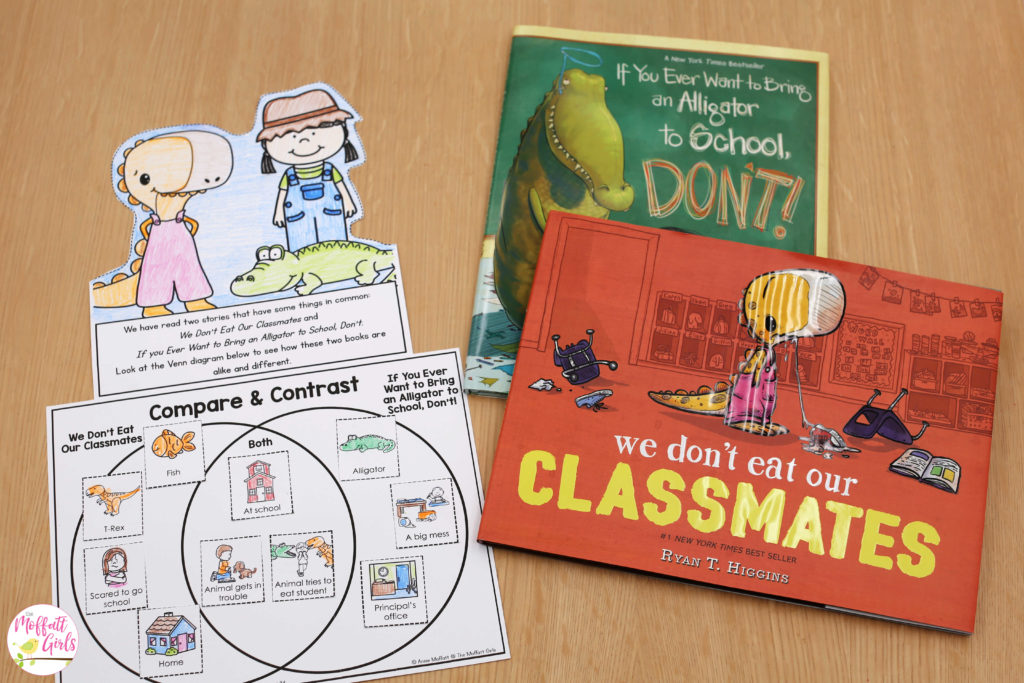
For this craft, students compare and contrast If You Ever Want to Bring an Alligator to School, Don’t! with We Don’t Eat Our Classmates.
Book 4: Up in the Garden and Down in the Dirt
This is a precious book that follows the journey of a garden throughout the seasons, starting with Winter and ending back in winter. While this book is non-fiction, it does contain some fiction elements.


Seasons Sort
This simple seasons sort helps students reflect on what they may already know about what is typical within each season.

Vocabulary
Below are the vocabulary word posters and activities for Up in the Garden and Down in the Dirt.


Asking & Answering Questions
This activity prompts students to reflect on the information that they gathered from the reading of the book. It also has students come up with a question for something they learned.

Making Connections & Organizing Information
The Making Connections activity helps students understand the connections between people and a garden and how they help each other. Then students can take some of the information they have used in that activity and extend it to the Organizing Information activity.


Craft
The week’s learning culminates in an adorable craft where students can match the different animal types to their rolls in the garden.


Book 5: Chrysanthemum
This is one of my absolute favorite books for many reasons! It’s simple, yet powerful message encourages students to embrace that in spite of what other people think, they are special.

Acrostic Name Poetry Center
This is such a fun way to encourage students to consider the many great qualities that make them who they are and turn it into an acrostic poem of their names.

Identifying Genre & Making Predictions
This book is a fictional story, and students can predict what they think the story is about based on a picture-walk.

Vocabulary
Highlight when students use these words when speaking to each other as they are learning through the First Grade Reading Comprehension Curriculum!


Retelling a Story
Use this activity to guide students in identifying the four main points in the story to put in order. Students can then use the outline to put the story sequencing cards in order.


Learning From Stories
On the final lesson day, students reflect on what Chrysanthemum learned, what Victoria learned and what they themselves learned from reading the story.

Craft
The weekly lessons culminate in this cute project, in which they identify what makes them special.

Book 6: Seed, Sprout, Pumpkin, Pie
I love this book, because it outlines all of the fun and interesting things that you can do with pumpkins! First, begin by outlining what you know and want to know about pumpkins.


Input, Output Center
You’re students will love this fun way to look at the different items that can be used to make something new!

Vocabulary
Students most likely will not know what these words mean, so it’s important to introduce the meanings for these words before reading the book.


Using the Text
Use the book to help students identify the order of events as a pumpkin grows.

Asking & Answering Questions
These questions prompt students to consider what they have learned throughout the book.

Craft
This is such a simple, but fun pumpkin craft. Each strip has a different fact about pumpkins, and students will use the strips to build a pumpkin.


Book 7: The Dot

Book 8: Rabbits


To see Quarter 1 of the Kindergarten Reading Comprehension, Click Here.
Share this:
Annie Moffatt
Annie Moffatt is a former elementary school teacher and homeschool mom with a passion for helping young learners thrive. With a background in early education and a heart for making learning fun, Annie designs engaging, low-prep resources that build confidence and success in the classroom. Her hands-on, kid-friendly approach has supported thousands of teachers and parents around the world in creating joyful learning experiences for their students.

I love this product and have started using it in my classroom! But where would I find the poetry? Is that a purchase I need to make?
Hi Alexis,
The poetry books supplement the reading books to meet the grade-level standards for 1st Grade. These books are optional, but enhance the learning experience.
Here is an affiliate link to Bill Martin Jr Big Book of Poetry: Click Here.
Here’s an affiliate link to the National Geographic’s Book of Animal Poetry: Click Here.
Kindly,
Annie